
Fall 2025 Newsletter
Message from the Chair
Dear APAM Community,
Greetings and best wishes for the New Year. This newsletter highlights the exceptional activities and accomplishments of our students, faculty, scientists, and alumni throughout the Fall semester. Faculty and students from all three APAM programs—Applied Physics, Material Science, and Applied Mathematics—have been engaged in a wide range of scientific and engineering endeavors. Here, we spotlight innovations in advanced photonics and lasers, new designs for fusion power plants, and a wide range of exciting advances in both hard and soft materials.
This semester also saw an extraordinary list of honors for faculty and researchers in all three programs, emphasizing their leadership roles and the interdisciplinary strengths of our department. Highlights include prestigious fellowships and prizes in Applied Physics, Applied Mathematics, and Material Sciences from the APS, the Materials Research Society, the American Meteorological Society, and others. Congratulations to all of our awardees.
As we prepare for another exciting year, I’m thrilled to welcome several new faculty members to APAM. Prof. Ben Zhu has joined the Plasma Physics/Fusion group and brings extensive expertise in computational Plasma Physics, high-performance computing and AI. And Curtiss Lyman joins the Applied Math group with a focus on the mathematics of quantum materials and condensed matter physics. Both will greatly enrich our community and promise to bring exciting new discoveries and innovations.
Finally, we warmly congratulate Prof. Michael E. Mauel on his retirement after forty years of dedicated service and his transition to Professor Emeritus of Applied Physics. We also congratulate Prof. Simon Billinge, Professor Emeritus, on his appointment as Director of the California Nanosystems Institute (CNSI) in the Materials Department at UC Santa Barbara. We thank them both for their invaluable contributions to the department and wish them well in their new endeavors. And they should know they are always welcome in the department—once APAM, always APAM.
I encourage you to explore the full newsletter to learn more about these accomplishments and many others. Together, we are shaping the future of science and engineering. Wishing everyone a year filled with continued achievements, growth, and discovery.
Best,
Prof. Marc Spiegelman
Chair, Department of Applied Physics & Applied Mathematics
Student News
Faculty News
Gaeta Wins 2026 Arthur L. Schawlow Prize in Laser Science
Gaeta Named Vice President of Optica’s 2026 Board of Directors
Wentzcovitch Wins the AIRAPT 2025 Bridgman Award
Ren Wins 2025 Feng Kang Prize for Computational Mathematics
Billinge Moves On to New Leadership Role
Sobel Receives 2026 AMS Joanne Simpson Tropical Meteorology Research Award
Wiggins Receives Honorary Doctorate from Niagara University
Simoncelli receives the 2025 Charles Haenny Prize in Physics
Zhang Named RCSA Scialog Fellow
Powerful and Precise Multi-color Lasers Now Fit on a Single Chip
Columbia Researchers Take the Temperature of Integrated Photonics
Inverted Plasma Shape Shows Promise for Future Fusion Power Plant Design
Quantum at Columbia: 100 Years On
Yu Featured in Harvard University News
New APAM Faculty Member: Ben Zhu
New APAM Faculty Member: Curtiss Lyman
Columbia Connected to New York Quantum Network
Consider the Chemistry of Your Quantum Materials, Say Researchers at Columbia
Hybrid Crystal-Glass Materials from Meteorites Transform Heat Control
Need a New 3D Material? Build It With DNA
Columbia Scientists Explain How Atomic Disorder Controls Heat
Professor Michael E. Mauel Retires After Four Decades of Service
Department & Alumni News
Newsletter Highlight
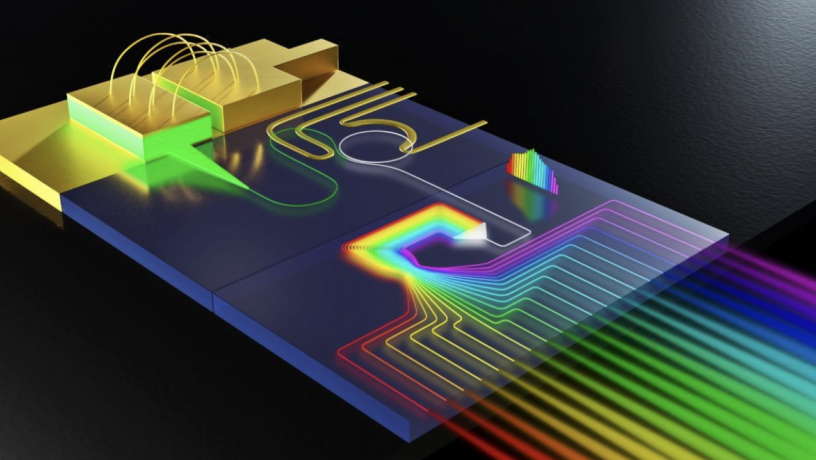
Powerful and Precise Multi-color Lasers Now Fit on a Single Chip: Researchers at Columbia Engineering have developed a compact light source that generates dozens of high-power wavelengths, paving the way for a new generation of data center hardware and portable sensing technologies.
Newsletter Highlight
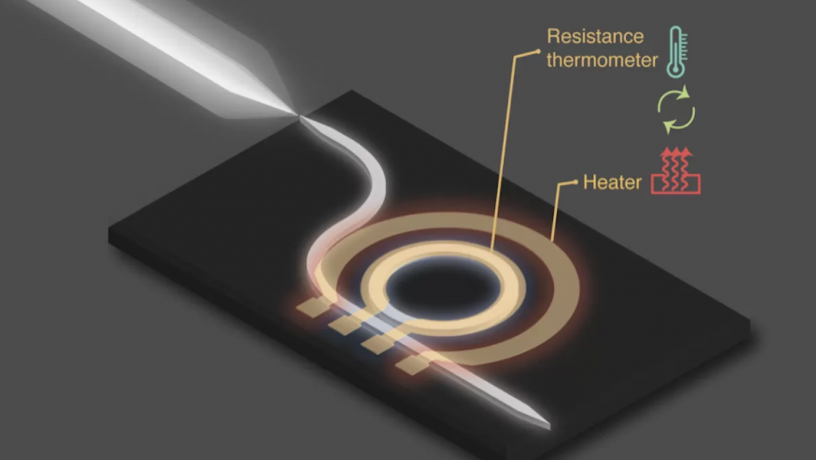
Columbia Researchers Take the Temperature of Integrated Photonics: A thin resistor routinely used in photonic devices can also act as a thermometer—a simple feature that could help integrated photonics reach its full potential.
Newsletter Highlight
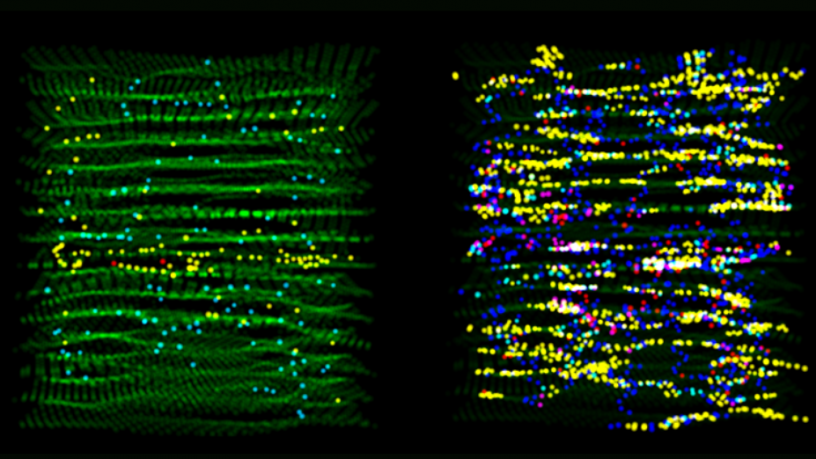
Columbia Scientists Explain How Atomic Disorder Controls Heat: Research led by Michele Simoncelli establishes a new framework that links atomic-scale disorder to heat conduction, paving the way for the theory-driven design and discovery of more efficient heat-shielding materials
Newsletter Highlight
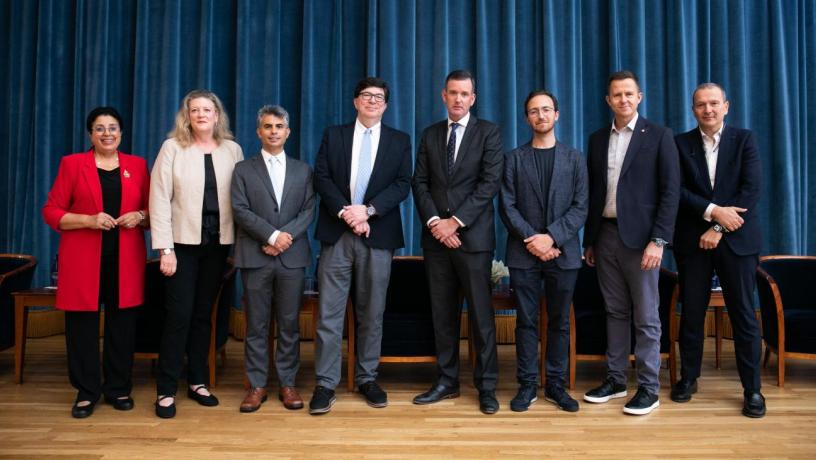
The Race to Fusion Energy: The Columbia Fusion Research Center, together with the Fusion Industry Association, recently brought together a diverse group of experts, policymakers, and industry leaders to discuss how cooperation and competition define the current global fusion landscape. Established earlier this year, the center leverages Columbia’s long-standing tradition o