
Professor Michael E. Mauel Retires After Four Decades of Service
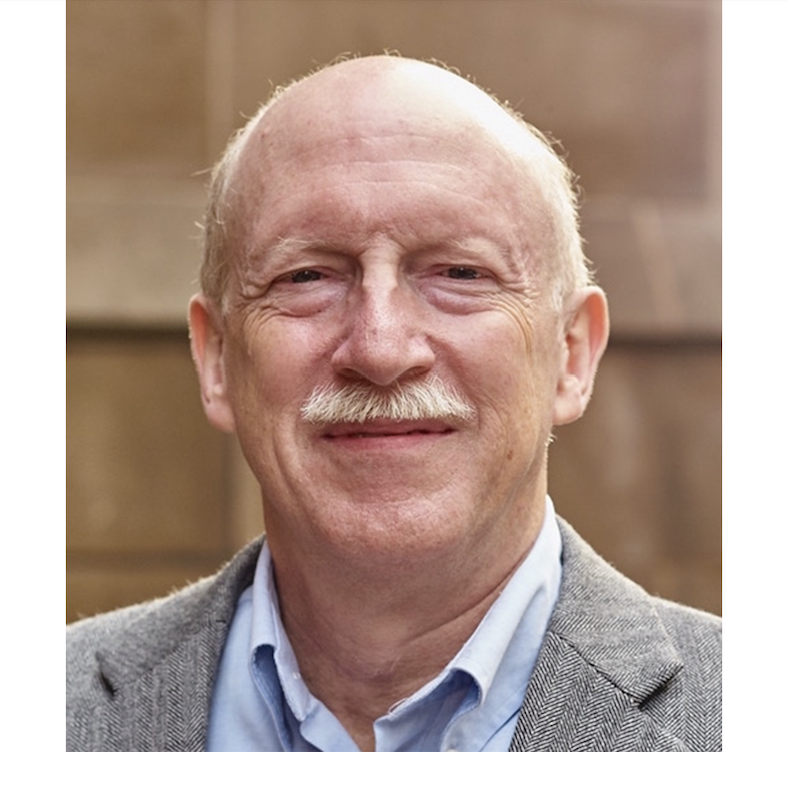 After a distinguished career at Columbia University, Professor Michael E. Mauel has retired and is now Professor Emeritus of Applied Physics. Since joining the faculty in 1985, Mauel has shaped the fields of plasma physics and fusion energy research while inspiring generations of students through his exceptional teaching, mentorship, and leadership.
Mauel devoted his career to understanding how hot, ionized gas, called plasma, behave under the influence of strong magnetic fields and how these insights can be applied to controlled fusion energy, semiconductor manufacturing, and particle transport in the magnetospheres surrounding planets. He is best known for developing new methods to control plasma behavior for fusion energy, creating relativistic magnetically-trapped electrons with electromagnetic waves, and pioneering studies of high-temperature plasma confined by a strong dipole magnet.
Mauel received his B.S. and Sc.D. from MIT, where he conducted research using microwaves to heat electrons trapped in magnetic mirror and tandem mirror fusion devices. Upon arriving at Columbia University, he worked alongside Professor Gerald Navratil to control high-pressure plasmas in tokamaks and worked with the late Akira Hasegawa, adjunct professor and scientist at Bell Laboratories, to explore the confinement of high-temperature plasma in laboratory magnetospheres, called “terrella.” Highlights of Mauel’s early research include (i) the first characterization of high-pressure plasma equilibrium from internal magnetic field measurements made within Columbia’s HBT tokamak and within the large TFTR experiment at the Princeton Plasma Physics Laboratory and (ii) the discovery of how variations in plasma current profile can enhance fusion performance and create an internal barrier to plasma heat transport. Motivated by Hasegawa’s theories and with the help of several talented graduate students, Mauel built the Collisionless Terrella Experiment (CTX) and investigated energetic particle transport and plasma turbulence confined by a strong dipole magnetic field. Among the CTX discoveries, students measured the natural “frequency chirping” of drift-resonant energetic particle instabilities, a phenomenon also found later in many magnetic fusion energy devices. The success of CTX experiments lead to the construction of the world’s largest magnetically levitated dipole experiment, called LDX, as a joint project of MIT and Columbia University. Using a high current superconducting magnet, the LDX experiment gave dramatic confirmation of Hasegawa’s dipole concept of stable high-pressure plasma confinement.
Following in the footsteps of colleagues Gerald Navratil and the late Robert Gross, founder of Columbia’s Plasma Lab, Professor Mauel became a central force guiding expansion of the Department of Applied Physics and Applied Mathematics and guiding strategy for the national fusion research program. Mauel served as chair of the APAM Department from 2000 to 2006 and developed the strategic plan that united the three programs of today’s Department: Applied Physics, Applied Mathematics, and Materials Science and Engineering. In 1996, Mauel helped to write a new strategic plan for the Department of Energy’s Office of Energy Research titled A Restructured Fusion Energy Sciences Program. In 1999, he organized and co-chaired the first Fusion Summer Study, located at the Snowmass Conference Center where over 300 scientists and engineers gathered from all fusion disciplines and communicated a future of shared research goals.
Mauel chaired the American Physical Society’s Division of Plasma Physics from 2002-2003; he chaired the U.S. Burning Plasma Council from 2010-2013; and he chaired the Plasma Science Committee of the National Research Council from 2012-2014. In 2006–2007, he served as a Jefferson Science Fellow in the Office of International Energy and Commodity Policy assisting U.S. diplomatic efforts to promote energy security. In 2017-2018, during a policy crossroad for the U.S. Fusion Energy Science Program, Mauel co-chaired the National Academies’ Committee for A Strategic Plan for U.S. Burning Plasma Research that recommended a strategy supporting both participation in the ITER fusion device, located in France, and construction of a fusion pilot plant in the United States. Mauel’s influence has been recognized with Certificates of Appreciation from both the U.S. Department of Energy and the U.S. Department of State, the 2020 Leadership Award by the Fusion Power Associates, and his appointment as lifetime associate of the U.S. National Academies.
“I have been enormously privileged to have worked with so many inventive students, scientists, and faculty colleagues,” said Mauel. “The Department of Applied Physics and Applied Mathematics both energized and inspired me. I am grateful for what I have learned from my students and for the joy of research and discovery that I have shared with my colleagues.” In 1994, Columbia Engineering undergraduates named him Teacher of the Year, and Mauel fondly recalls his time in the Plasma Lab, including non-academic pursuits like the running of the Brooklyn Half-Marathon.
Across his distinguished career, Professor Mauel combined imaginative scientific inquiry with a deep commitment to educating the next generation of physicists and engineers. His contributions strengthened Columbia Engineering’s leadership in plasma physics and helped shape the pursuit of fusion science and clean energy technology.
We express our deepest gratitude to Professor Mauel for his decades of scholarship, service, and mentorship and extend our warmest wishes for a fulfilling and well-deserved retirement.
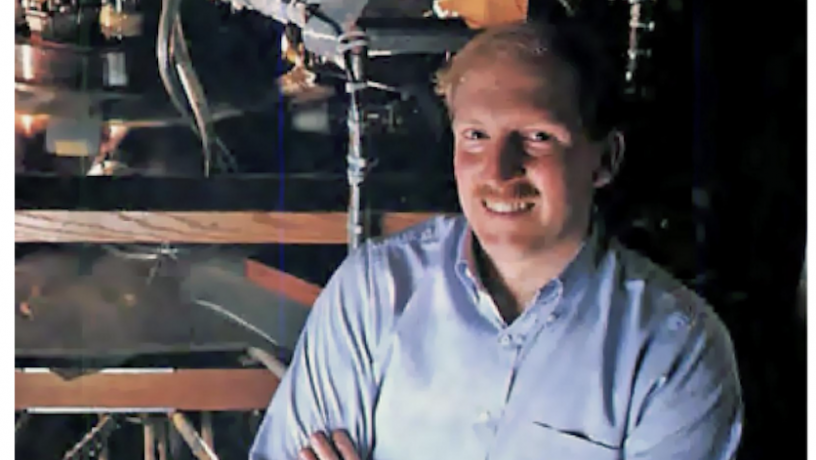
Professor Mauel featured in Macworld magazine (1989)
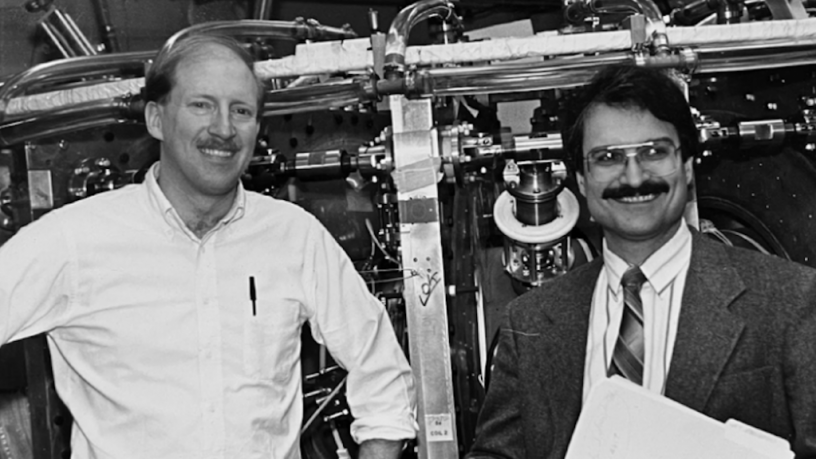
Professors Mauel and Navratil with HBT-EP (1993)
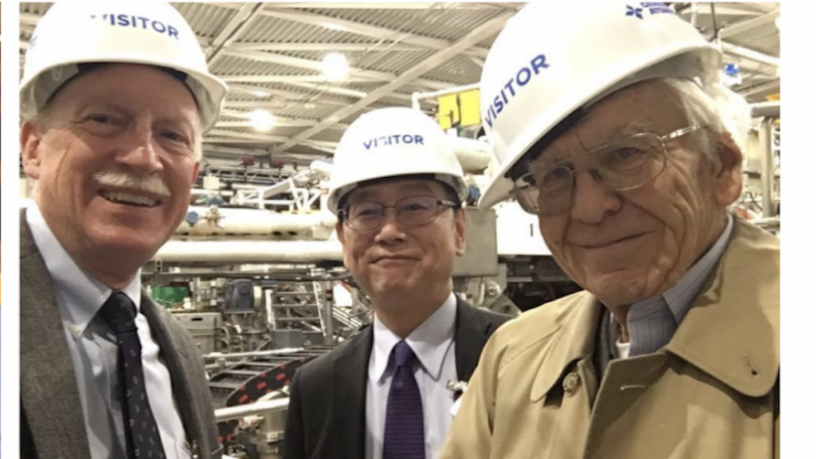
Mike Mauel, Mitsuru Kikuchi, and Ken Fowler at NAS Meeting at DIII-D (2018)
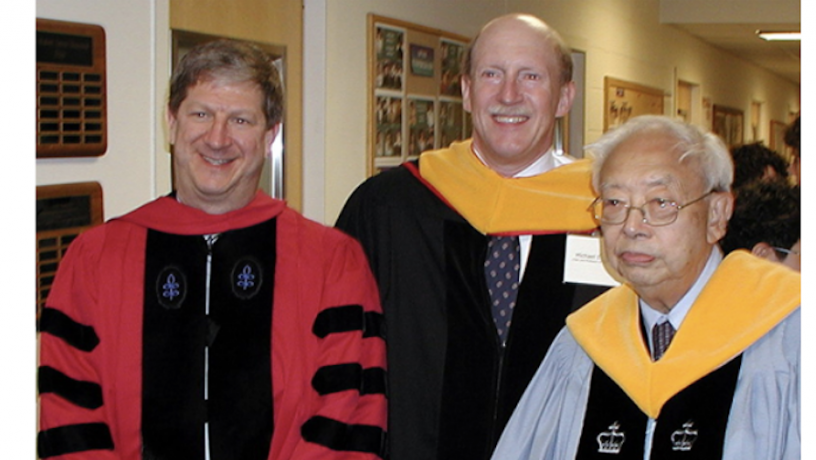
Professors David Keyes, Mike Mauel, and C.K. Chu (2006)
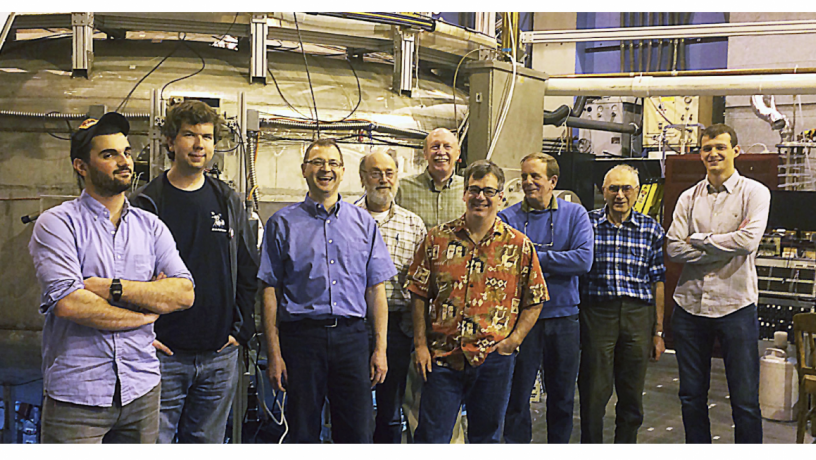
Professor Mauel with Jay Kesner, Darren Garnier, and Scientific Team of Levitated Dipole Experiment (2015)
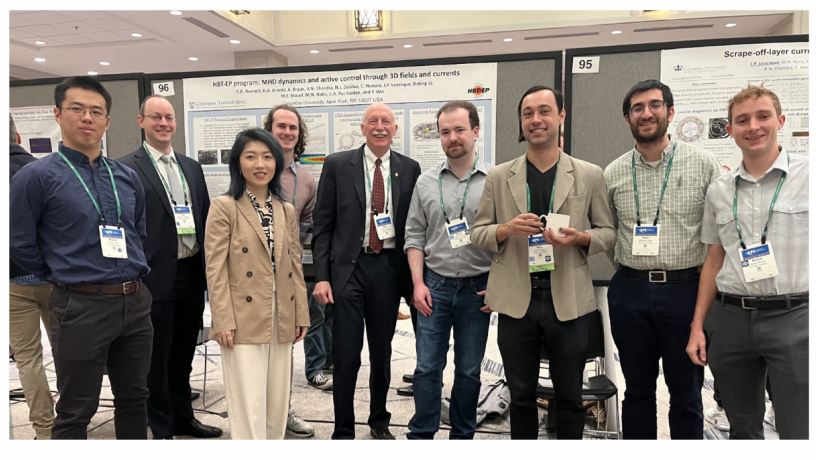
Professor Mauel with HBT-EP Presentations at APS DPP Annual Meeting (2023)
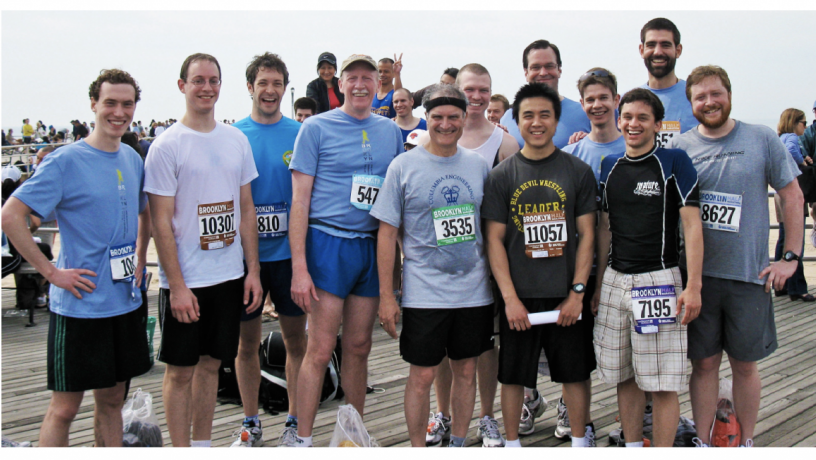
Professors Mauel and Navratil and Plasma Lab at finish of Brooklyn Half-Marathon (2010)