Columbia University in the City of New York
Columbia | Engineering
Menu
Info for…
[Select an Audience]
  • Prospective Undergraduate Students
  • Current Undergraduate Students
  • Prospective Masters Students
  • Prospective Doctoral Students
  • Current Doctoral Students
  • Faculty & Staff
  • Alumni
  • Home»
  • About»
    • Letter from the Chair
    • History
    • Laboratory Facilities
    • Achievements
    • Contact Us
  • Applied Physics»
    • Overview
    • Undergraduate Program
    • Graduate Programs
    • Research
    • Faculty
    • News
  • Applied Mathematics»
    • Overview
    • Undergraduate Program
    • Graduate Programs
    • Research
    • Faculty
    • News
  • Materials Science and Engineering»
    • Overview
    • Undergraduate Program
    • Graduate Programs
    • Research
    • Faculty
    • News
  • Medical Physics»
    • Programs
    • Courses
    • Faculty
    • FAQ
    • News
    • Admissions and Placement Statistics
  • Research»
  • Seminars»
    • Special Seminars & Events
    • Applied Mathematics Colloquium
    • Materials Science and Engineering Colloquium
    • Plasma Physics/Fusion Center Colloquium
    • SEAS Colloquium in Climate Science (SCiCS)
    • Research Conference
    • Distinguished Colloquium Series in Interdisciplinary and Applied Mathematics (DCSIAM)
    • American Meteorological Society's NYC / Long Island Chapter Seminar
    • Materials Simulations in Earth and Planetary Sciences Seminars
  • Admissions»
    • Undergraduate Admissions
    • Graduate Admissions
    • Frequently Asked Questions (FAQs)
    • Online Learning & Non-Degree Programs
  • People»
    • Faculty & Staff
    • Research Scientists & Postdocs
    • Students
    • Alumni
    • Academic Advisors
    • In Memoriam
  • Courses»
  • Careers
  • News
  • Newsletters
  • Resources
  • Conferences & Workshops
  • Bulletin
  • Open Faculty Positions

Applied Physics and Applied Mathematics

with Materials Science and Engineering

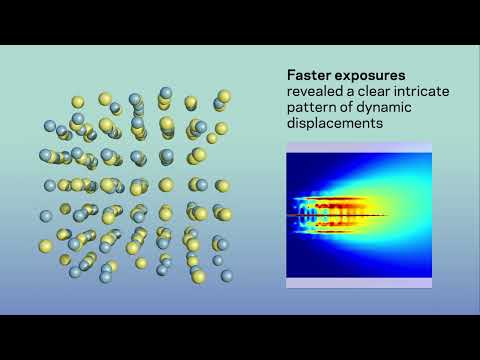
Revealing Atomic Structures with a "Neutron" Camera

Runtime 0:49

Researchers have developed a new kind of "camera" that sees the local disorder in materials. Its key feature is a variable shutter speed: because the disordered atomic clusters are moving, when the team used a slow shutter, the dynamic disorder blurred out, but when they used a fast shutter, they could see it. The new method doesn't work like a conventional camera--it uses neutrons to measure atomic positions with a shutter speed of around one picosecond, a trillion times faster than normal camera shutters. Video produced by Oak Ridge National Laboratory
Revealing Atomic Structures with a

Revealing Atomic Structures with a "Neutron" Camera

Runtime 0:49

Researchers have developed a new kind of "camera" that sees the local disorder in materials. Its key feature is a variable shutter speed: because the disordered atomic clusters are moving, when the team used a slow shutter, the dynamic disorder blurred out, but when they used a fast shutter, they could see it. The new method doesn't work like a conventional camera--it uses neutrons to measure atomic positions with a shutter speed of around one picosecond, a trillion times faster than normal camera shutters. Video produced by Oak Ridge National Laboratory
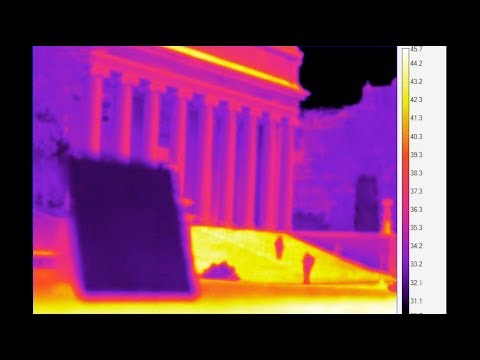
MAKING PAINTS WHITER AND COOLER

MAKING PAINTS WHITER AND COOLER

Runtime 2:22

This work shows a breakthrough by Columbia Engineers to create porous polymer coating and achieve cooling even under strong sunlight. The work entitled "Hierarchically Porous Polymer Coatings for Highly Efficient Passive Daytime Radiative Cooling" is published in Science Magazine on Sep 27, 2018.
Engineering Light: Nanophotonics at Columbia Engineering

Engineering Light: Nanophotonics at Columbia Engineering

Runtime 3:55

Read the full interview in Columbia Engineering magazine. After almost a decade of long-distance collaborations, Keren Bergman, Michal Lipson, and Alex Gaeta are working together in one place, here at Columbia Engineering. Lipson and Gaeta joined the School this summer as the Eugene Higgins Professor in Electrical Engineering (EE) and the David M. Rickey Professor of Applied Physics and of Materials Science, respectively. And now, together with Bergman, who is the Charles Batchelor Professor and EE chair, the trio is set to break new ground in nanophotonics, or, as Lipson, a preeminent leader in nanophotonic fabrication, puts it, “optics on a very, very small scale.”

Yuan Yang Flexible Battery, Smart Watch, and Meter

Yuan Yang Flexible Battery, Smart Watch, and Meter

Runtime 2:07

Video demonstrating flexibility of Yang's lithium-ion battery powering a smart watch, in flat, flexed, and twisted configurations.
Transmission Microscopy Lab: probing the structure of materials at nanoscales

Transmission Microscopy Lab: probing the structure of materials at nanoscales

Runtime 2:23

Materials science pioneer Katayun Barmak takes you behind the scenes at Columbia Nano Initiative’s new Electron Microscopy lab where researchers probe the nature of materials at the nanoscale.
The Nanostructure Problem: Simon Billinge at Brookhaven National Labs

The Nanostructure Problem: Simon Billinge at Brookhaven National Labs

Runtime 3:17

In order to see inside nanomaterials and learn how nanoparticles evolve, Simon Billinge, applies the world’s newest and brightest synchrotron light source—the National Synchrotron Light Source II (NSLS-II) at the U.S. Department of Energy’s Brookhaven National Laboratory A physicist with a joint position at Columbia University's School of Engineering and Applied Science and Brookhaven, Billinge gives us a tour of his workflow at NSLS-II.
Spinning Out, In Control (Panel, Full Video) | #StartupColumbia 2018

Spinning Out, In Control (Panel, Full Video) | #StartupColumbia 2018

Runtime 50:04

Sponsored by Columbia's Women Inventors Network and by Women in Science @ Columbia, this discussion takes a deep dive into the tale of three scientists' journey from innovation to spinout and what life is like at the intersection of university research and the commercial sector.
Advanced Data Analysis Techniques in Materials Science with Simon J. L. Billinge

Advanced Data Analysis Techniques in Materials Science with Simon J. L. Billinge

Runtime 5:31

Simon J. L. Billinge, winner of the 2025 MRS Innovation in Materials Characterization Award, sits down with MRS TV to discuss data analysis algorithms in materials science and how they've evolved with artificial intelligence and machine learning.
150th Anniversary Symposium: Columbia's Engineering Renaissance. Materials. 04

150th Anniversary Symposium: Columbia's Engineering Renaissance. Materials. 04

Runtime 4:41

Colin Fink. Pioneering Electrochemistry / Computation and Materials Discovery Alan C. West, Samuel Ruben–Peter G. Viele Professor of Electrochemistry and Professor of Chemical Engineering Chris Marianetti, Associate Professor of Materials Science and Applied Physics and Applied Mathematics
Columbia | Engineering. The Fu Foundation School of Engineering and Applied Science

500 W. 120th Street #200

New York, NY 10027 

Tel (212) 854-4457

Google Maps
Plan a Visit
  • Directory
  • Contact
  • Columbia Engineering
  • Columbia University
  • Office of Disability Services
  • Accessibility