Columbia University in the City of New York
Columbia | Engineering
Menu
Info for…
[Select an Audience]
  • Prospective Undergraduate Students
  • Current Undergraduate Students
  • Prospective Masters Students
  • Prospective Doctoral Students
  • Current Doctoral Students
  • Faculty & Staff
  • Alumni
  • Home»
  • About»
    • Letter from the Chair
    • History
    • Laboratory Facilities
    • Achievements
    • Contact Us
  • Applied Physics»
    • Overview
    • Undergraduate Program
    • Graduate Programs
    • Research
    • Faculty
    • News
  • Applied Mathematics»
    • Overview
    • Undergraduate Program
    • Graduate Programs
    • Research
    • Faculty
    • News
  • Materials Science and Engineering»
    • Overview
    • Undergraduate Program
    • Graduate Programs
    • Research
    • Faculty
    • News
  • Medical Physics»
    • Programs
    • Courses
    • Faculty
    • FAQ
    • News
    • Admissions and Placement Statistics
  • Research»
  • Seminars»
    • Special Seminars & Events
    • Applied Mathematics Colloquium
    • Materials Science and Engineering Colloquium
    • Plasma Physics/Fusion Center Colloquium
    • SEAS Colloquium in Climate Science (SCiCS)
    • Research Conference
    • Distinguished Colloquium Series in Interdisciplinary and Applied Mathematics (DCSIAM)
    • American Meteorological Society's NYC / Long Island Chapter Seminar
    • Materials Simulations in Earth and Planetary Sciences Seminars
  • Admissions»
    • Undergraduate Admissions
    • Graduate Admissions
    • Frequently Asked Questions (FAQs)
    • Online Learning & Non-Degree Programs
  • People»
    • Faculty & Staff
    • Research Scientists & Postdocs
    • Students
    • Alumni
    • Academic Advisors
    • In Memoriam
  • Courses»
  • Careers
  • News
  • Newsletters
  • Resources
  • Conferences & Workshops
  • Bulletin
  • Open Faculty Positions

Applied Physics and Applied Mathematics

with Materials Science and Engineering

The Future of Fusion

Runtime 1:15

What if we created energy using the same method as the Sun? This Earth Day, we're excited to explore fusion energy in the newest edition of our limited-series newsletter, The Lever, featuring perspectives from experts at Columbia Engineering and beyond. Subscribe today to learn about this carbon free, low-waste, always-on source of energy. https://bit.ly/4tBUXas
The Future of Fusion

The Future of Fusion

Runtime 1:15

What if we created energy using the same method as the Sun? This Earth Day, we're excited to explore fusion energy in the newest edition of our limited-series newsletter, The Lever, featuring perspectives from experts at Columbia Engineering and beyond. Subscribe today to learn about this carbon free, low-waste, always-on source of energy. https://bit.ly/4tBUXas
(Almost) Everything is Plasma

(Almost) Everything is Plasma

Runtime 0:45

The plasma used in fusion power is hotter than the Sun. Elizabeth Paul uses AI to design magnetic systems to control plasma in a fusion power plant. Hear more from Professor Paul and her colleagues at Columbia Engineering: subscribe to our Lever series on fusion to learn about this carbon free, low-waste, always-on source of energy. http://engineering.columbia.edu/the-lever/fusion
Beat the Heat in the Living Wings of Butterflies

Beat the Heat in the Living Wings of Butterflies

Runtime 3:28

The wings of Lepidoptera contain a matrix of living cells whose functioning requires appropriate temperatures. However, given their small thermal capacity, wings can overheat rapidly in the sun. Here we analyze butterfly wings across a wide range of simulated environmental conditions, and find that regions containing living cells are maintained at cooler temperatures in a manner that is largely unaffected by visible color patterns. Diverse scale nanostructures and non-uniform cuticle thicknesses create a heterogeneous distribution of radiative cooling that selectively reduces the temperature of living structures such as wing veins and androconial organs.
Quantum at Columbia: 100 years on

Quantum at Columbia: 100 years on

Runtime 4:15

A century ago, European physicists developed the theory of quantum mechanics—a momentous occasion marked in 2025 as the International Year of Quantum Science and Technology by the United Nations. Quantum mechanics changed the way scientists think about the world we live in, and its counterintuitive rules continue to ripple into a new century. Columbia physicist I.I. Rabi was instrumental in bringing quantum mechanics to campus. Today, collaborative teams of Columbia engineers, physicists, and chemists continue a quantum legacy decades in the making. Watch how quantum got its start at Columbia and how it influences research today. Artlist hereby grants the Client a non-exclusive, worldwide and perpetual license to integrate and synchronize regarding the use of the asset song “Long Strokes created by Ziv Moran, Oren Tsor”, including the sound recording rights and musical composition rights (where applicable) necessary for use in an audio-visual work. Artlist hereby grants the Client a non-exclusive, worldwide and perpetual license to integrate and synchronize regarding the use of the asset song “Ashes and Empires - Alternative version created by Angelika Conrad”, including the sound recording rights and musical composition rights (where applicable) necessary for use in an audio-visual work.
Usable Climate Science: Calculating Climate Risk in an Era of Extremes

Usable Climate Science: Calculating Climate Risk in an Era of Extremes

Runtime 1:06:53

As demand for climate risk information grows, traditional climate science alone is not enough to guide the adaptations our future requires. Yet without organized standards for translating data into usable insights, climate risk science remains a “Wild West,” where the private sector dominates with expensive, proprietary, and often opaque products. This talk by Adam Sobel — Professor of Applied Physics and Applied Mathematics and of Earth and Environmental Science at Columbia University — argues for coordinated, public efforts to build usable climate risk science, illustrated through recent findings on hurricane risk under climate change and the profound uncertainties surrounding tropical Pacific climate trends. About IBES: The Institute at Brown for Environment and Society (IBES) is accelerating solutions to the most complex climate and sustainability challenges of our time through interdisciplinary research and teaching. Learn more: https://ibes.brown.edu/ Join the IBES Alumni & Family Network: https://ibes.brown.edu/opportunities/ibes-alumni-family-network Brown University October 31, 2025
Advanced Data Analysis Techniques in Materials Science with Simon J. L. Billinge

Advanced Data Analysis Techniques in Materials Science with Simon J. L. Billinge

Runtime 5:31

Simon J. L. Billinge, winner of the 2025 MRS Innovation in Materials Characterization Award, sits down with MRS TV to discuss data analysis algorithms in materials science and how they've evolved with artificial intelligence and machine learning.
Data + Society

Data + Society

Runtime 4:41

Columbia Engineering professor Chris Wiggins and Columbia School of Social Work professor Courtney Cogburn explore the promise and pitfalls of using data to understand the world — and to change it.
In Brief: Professors Chris Wiggins and Matthew Jones on

In Brief: Professors Chris Wiggins and Matthew Jones on "How Data Happened'

Runtime 0:48

Two professors, two fields, two schools. A data scientist and applied mathematician teaching with an expert on the history of science and technology. One class, one book, one vision. We went behind the scenes with Columbia's two professors for a brief exchange on their book "How Data Happened" which emerged from their class "Data: Past, Present, and Future."
From Chaos to Code: How AI Can Tame the Climate Crisis | Columbia AI Summit

From Chaos to Code: How AI Can Tame the Climate Crisis | Columbia AI Summit

Runtime 53:29

12:00 PM - 1:00 PM: Morningside Campus - Low Memorial Library From spreading wildfires to catastrophic snowstorms, extreme weather events present unprecedented challenges. These climate disasters are rarely isolated; instead, they set off cascading failures across socio-economic systems, disrupting supply chains, healthcare, infrastructure, and communities. Their impacts also ripple through natural ecosystems, displacing wildlife and disrupting biodiversity. This panel will detail how AI is emerging as a powerful ally in supporting disaster preparedness and building resilience across interconnected systems. Speakers: Jessica Fanzo, Climate School Adam Sobel, Climate School, Lamont-Doherty Earth Observatory George Deodatis, Columbia Engineering Dustin Rubenstein, Graduate School of Arts and Sciences Bolun Xu, Columbia Engineering David Sandalow, School of International and Public Affairs Michael Puma, Climate School (Session Lead, Moderator)

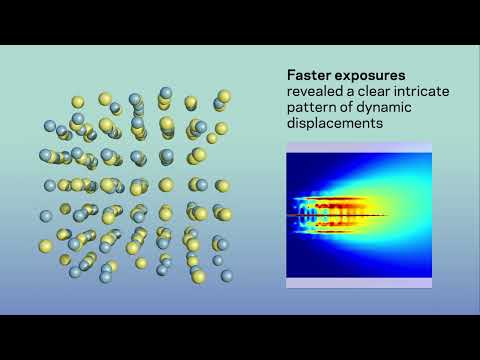
Revealing Atomic Structures with a

Revealing Atomic Structures with a "Neutron" Camera

Runtime 0:49

Researchers have developed a new kind of "camera" that sees the local disorder in materials. Its key feature is a variable shutter speed: because the disordered atomic clusters are moving, when the team used a slow shutter, the dynamic disorder blurred out, but when they used a fast shutter, they could see it. The new method doesn't work like a conventional camera--it uses neutrons to measure atomic positions with a shutter speed of around one picosecond, a trillion times faster than normal camera shutters. Video produced by Oak Ridge National Laboratory
Climate change and the challenge of long-term thinking | Adam Sobel | TEDxBroadway

Climate change and the challenge of long-term thinking | Adam Sobel | TEDxBroadway

Runtime 10:45

Adam Sobel doesn't want to prove that climate change is real. If you don't believe yet, he's confident you will eventually. Instead, what he wants to do is help our decision making about long-term events with future consequences to be better. He talks about climate change and how it has already and will continue to affect New York City, and how everyone should be thinking differently. Adam Sobel is a professor at Columbia University’s Lamont-Doherty Earth Observatory and Fu Foundation School of Engineering and Applied Sciences. He is an atmospheric scientist who specializes in the dynamics of climate and weather, particularly in the tropics, on time scales of days to decades. This talk was given at a TEDx event using the TED conference format but independently organized by a local community. Learn more at http://ted.com/tedx
Engineering Light: Nanophotonics at Columbia Engineering

Engineering Light: Nanophotonics at Columbia Engineering

Runtime 3:55

Read the full interview in Columbia Engineering magazine. After almost a decade of long-distance collaborations, Keren Bergman, Michal Lipson, and Alex Gaeta are working together in one place, here at Columbia Engineering. Lipson and Gaeta joined the School this summer as the Eugene Higgins Professor in Electrical Engineering (EE) and the David M. Rickey Professor of Applied Physics and of Materials Science, respectively. And now, together with Bergman, who is the Charles Batchelor Professor and EE chair, the trio is set to break new ground in nanophotonics, or, as Lipson, a preeminent leader in nanophotonic fabrication, puts it, “optics on a very, very small scale.”
LightSaber Physics with Columbia Engineering

LightSaber Physics with Columbia Engineering

Runtime 5:57

Ever wonder how lightsabers work? Watch how plasma physics make these signature Star Wars weapons possible -- in every color of the rainbow.
Revolutionary Ultra-thin “Meta-lens” Technology

Revolutionary Ultra-thin “Meta-lens” Technology

Runtime 2:27

Broadband imaging in the near-infrared using a single meta-lens, showing the ability of the lens in correcting chromatic aberrations, and manufacturing of meta-lenses using planar fabrication techniques similar to those used in the integrated circuits industry.
The Nanostructure Problem: Simon Billinge at Brookhaven National Labs

The Nanostructure Problem: Simon Billinge at Brookhaven National Labs

Runtime 3:17

In order to see inside nanomaterials and learn how nanoparticles evolve, Simon Billinge, applies the world’s newest and brightest synchrotron light source—the National Synchrotron Light Source II (NSLS-II) at the U.S. Department of Energy’s Brookhaven National Laboratory A physicist with a joint position at Columbia University's School of Engineering and Applied Science and Brookhaven, Billinge gives us a tour of his workflow at NSLS-II.
Yuan Yang Flexible Battery, Smart Watch, and Meter

Yuan Yang Flexible Battery, Smart Watch, and Meter

Runtime 2:07

Video demonstrating flexibility of Yang's lithium-ion battery powering a smart watch, in flat, flexed, and twisted configurations.
Nuclear Fusion Energy: The Race to Create a Star on Earth

Nuclear Fusion Energy: The Race to Create a Star on Earth

Runtime 11:06

If the processes powering the fusion reactor at the Sun's core could be recreated on Earth, it would be one of the most important events in the history of our species. Nuclear fusion power plants could end our dependency on fossil fuels and provide a virtually limitless, highly efficient source of clean energy. We went to two of the world's leading nuclear fusion research centers—Sandia National Labs in New Mexico and General Fusion outside Vancouver—to see how close we are to bringing the power of the stars down to Earth. Check out CNET's channel for more: http://bit.ly/2gpeXdr Subscribe to MOTHERBOARD: http://bit.ly/Subscribe-To-MOTHERBOARD Follow MOTHERBOARD Facebook: http://www.facebook.com/motherboardtv Twitter: http://twitter.com/motherboard Tumblr: http://motherboardtv.tumblr.com/ Instagram: http://instagram.com/motherboardtv More videos from the VICE network: https://www.fb.com/vicevideo
Adam Sobel: Preparing for the Next Big Storm

Adam Sobel: Preparing for the Next Big Storm

Runtime 5:36

Superstorm Sandy was a wake-up call for a lot of people in New York City, including Adam Sobel, who’s spent more than two decades studying the physics of weather and climate. He spent a lot of time talking to the media about what was happening, and why. He says the intense public interest made clear to him the need to find ways to apply the esoteric physics of atmosphere and oceans so we can be better prepared for the next extreme event. Sobel is a research scientist and professor in the Department of Applied Physics and Applied Mathematics, the Department of Earth and Environmental Sciences and the Lamont-Doherty Earth Observatory. He directs the Columbia Initiative on Extreme Weather and Climate. In this latest in our video series, Sobel talks about the hard work of predicting extreme and rare weather events, and how he came to study in this field. (Photos: NOAA, NASA, U.S. Navy, U.S. Coast Guard, NYC MTA, John Allen, Creative Commons)
Engineering for Humanity: CONNECTED

Engineering for Humanity: CONNECTED

Runtime 0:27

Spinning Out, In Control (Panel, Full Video) | #StartupColumbia 2018

Spinning Out, In Control (Panel, Full Video) | #StartupColumbia 2018

Runtime 50:04

Sponsored by Columbia's Women Inventors Network and by Women in Science @ Columbia, this discussion takes a deep dive into the tale of three scientists' journey from innovation to spinout and what life is like at the intersection of university research and the commercial sector.
Nanfang Yu: The engineer and the butterfly

Nanfang Yu: The engineer and the butterfly

Runtime 0:58

Transmission Microscopy Lab: probing the structure of materials at nanoscales

Transmission Microscopy Lab: probing the structure of materials at nanoscales

Runtime 2:23

Materials science pioneer Katayun Barmak takes you behind the scenes at Columbia Nano Initiative’s new Electron Microscopy lab where researchers probe the nature of materials at the nanoscale.
Bridging the gap - hacking the future of NYC: Chris Wiggins at TEDxColumbiaEngineeringSchool

Bridging the gap - hacking the future of NYC: Chris Wiggins at TEDxColumbiaEngineeringSchool

Runtime 9:34

Chris Wiggins is an associate professor of applied mathematics at Columbia University and co-founder of hackNY. He is a member of the faculty in the School of Engineering and Applied Science, and is a founding member of both the Institute for Data Sciences and Engineering, and the Department of Systems Biology. His research is at the intersection of data science and the natural sciences, particularly biology. In the spirit of ideas worth spreading, TEDx is a program of local, self-organized events that bring people together to share a TED-like experience. At a TEDx event, TEDTalks video and live speakers combine to spark deep discussion and connection in a small group. These local, self-organized events are branded TEDx, where x = independently organized TED event. The TED Conference provides general guidance for the TEDx program, but individual TEDx events are self-organized.* (*Subject to certain rules and regulations)
DBMI Data Science Retreat 2018 Matthew Jones and Chris Wiggins

DBMI Data Science Retreat 2018 Matthew Jones and Chris Wiggins

Runtime 1:20:55

Speaker: Matthew Jones & Chris Wiggins Title: Data: Past, Present, and Future DBMI Data Science Retreat 2018 April 18th
Part 1: Extreme Weather and Climate Change

Part 1: Extreme Weather and Climate Change

Runtime 6:57

Extreme Weather and Climate Change, part 1: What We Know Nevis Labs: http://www.nevis.columbia.edu/ Science-on-Hudson lectures: http://www.nevis.columbia.edu/events/science-on-hudson.html Facebook: https://www.facebook.com/NevisLaboratories Twitter: https://twitter.com/NevisLabs Columbia initiative on Extreme Weather and Climate: http://extremeweather.columbia.edu/ Description of the talk: Speaker: Professor Adam Sobel, Columbia University Part of Nevis Labs' #ScienceOnHudson lecture series. Recorded Thu Feb 16, 2017 How does climate change influence extreme weather events? Are they increasing in frequency or intensity? When a particular event happens, can we say with any justification that climate change played a role, or that it didn’t? How does the answer differ depending on which kind of event we are talking about – heat waves, floods, droughts, hurricanes, or tornadoes? I will explain what we know and don’t know, based on the latest scientific research on these topics.
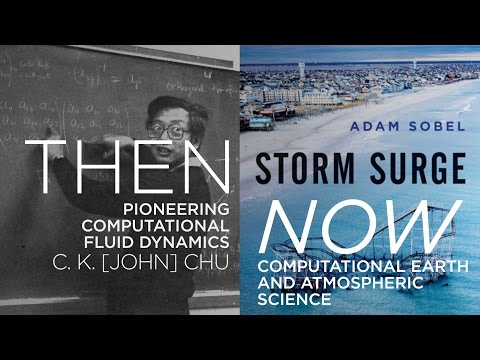
150th Anniversary Symposium: Columbia's Engineering Renaissance. Fluids. 12

150th Anniversary Symposium: Columbia's Engineering Renaissance. Fluids. 12

Runtime 5:15

C. K. [John] Chu. Pioneering Computational Fluid Dynamics / Computational Earth and Atmospheric Science Michael Mauel, Professor of Applied Physics Adam Sobel, Professor of Applied Physics and Applied Mathematics and of Earth and Environmental Sciences
150th Anniversary Symposium: Columbia's Engineering Renaissance. Materials. 04

150th Anniversary Symposium: Columbia's Engineering Renaissance. Materials. 04

Runtime 4:41

Colin Fink. Pioneering Electrochemistry / Computation and Materials Discovery Alan C. West, Samuel Ruben–Peter G. Viele Professor of Electrochemistry and Professor of Chemical Engineering Chris Marianetti, Associate Professor of Materials Science and Applied Physics and Applied Mathematics
Undergraduate Program in Applied Physics and Applied Math w/ Materials Science and Engineering

Undergraduate Program in Applied Physics and Applied Math w/ Materials Science and Engineering

Runtime 2:53

Applied Physics and Applied Mathematics at Columbia University

Applied Physics and Applied Mathematics at Columbia University

Runtime 3:02

In Brief: Professors Chris Wiggins and Matthew Jones on

In Brief: Professors Chris Wiggins and Matthew Jones on "How Data Happened'

Runtime 0:48

Two professors, two fields, two schools. A data scientist and applied mathematician teaching with an expert on the history of science and technology. One class, one book, one vision. We went behind the scenes with Columbia's two professors for a brief exchange on their book "How Data Happened" which emerged from their class "Data: Past, Present, and Future."
Master of Science in Medical Physics

Master of Science in Medical Physics

Runtime 3:13

Find out more about Columbia Engineering's Medical Physics specialities and how the master's program combines resources from Columbia University Medical Center and the Department of Applied Physics and Applied Mathematics.
Columbia | Engineering. The Fu Foundation School of Engineering and Applied Science

500 W. 120th Street #200

New York, NY 10027 

Tel (212) 854-4457

Google Maps
Plan a Visit
  • Directory
  • Contact
  • Columbia Engineering
  • Columbia University
  • Office of Disability Services
  • Accessibility