Image
Medical Physics Program
Medical Physics is a branch of physics where the concepts and methods of physics are used for the diagnosis and treatment of human disease. Medical Physicists provide clinical service and consultation, research and development, and teaching.
Columbia Engineering's CAMPEP-accredited Program is designed to prepare students for professional careers in the field of Medical Physics.
Medical Physics

Programs
We offer a full-time and part-time MS degree, as well as a Certificate of Professional Achievement in Medical Physics.

Medical Physics FAQ
See our Frequently Asked Questions list to learn more about our programs, requirements, and admissions.
Master of Science in Medical Physics
Find out more about Columbia Engineering's Medical Physics specialties and how the master's program combines resources from Columbia University Medical Center and the Department of Applied Physics and Applied Mathematics.
CAMPEP-Accredited Medical Physics MS Program
Our 36-point CAMPEP-accredited program educates, trains, and prepares future medical physicists. It is registered with the State of New York, is administered by faculty from the Fu Foundation School of Engineering and Applied Science in collaboration with faculty from the College of Physicians and Surgeons and the Mailman School of Public Health, leads to a Master of Science (MS) degree, and provides preparation toward certification by the American Board of Radiology.
-
Specializations
Radiation Therapy Physicists perform acceptance testing and commissioning of new equipment, calibrate radiotherapy units and maintain their clinical information, contribute to the development of therapeutic techniques, design treatment plans, and assure the safe and effective delivery of radiation as prescribed in patient care.
Diagnostic Radiology Physicists contribute to the advancement and effectiveness of radiological imaging exams and procedures by helping to develop improved imaging techniques and using them for the diagnosis of disease in patients.
Nuclear Medicine Physicists ensure correct and safe application of radioactive molecular-agents used in the diagnosis and treatment of disease, assist in the introduction of new agents including their dosimetry, assess the performance of Nuclear Medicine equipment, and contribute to the development of quality assurance programs.
Medical Health Physicists contribute to the protection of patients and the public from excessive radiation by establishing and monitoring radiation safety procedures and ensuring compliance with applicable federal and state regulations.
-
Application Information
Please see the Graduate Admissions site for more information about applying or contact the the Medical Physics Program Coordinator if you have any questions about the program.
-
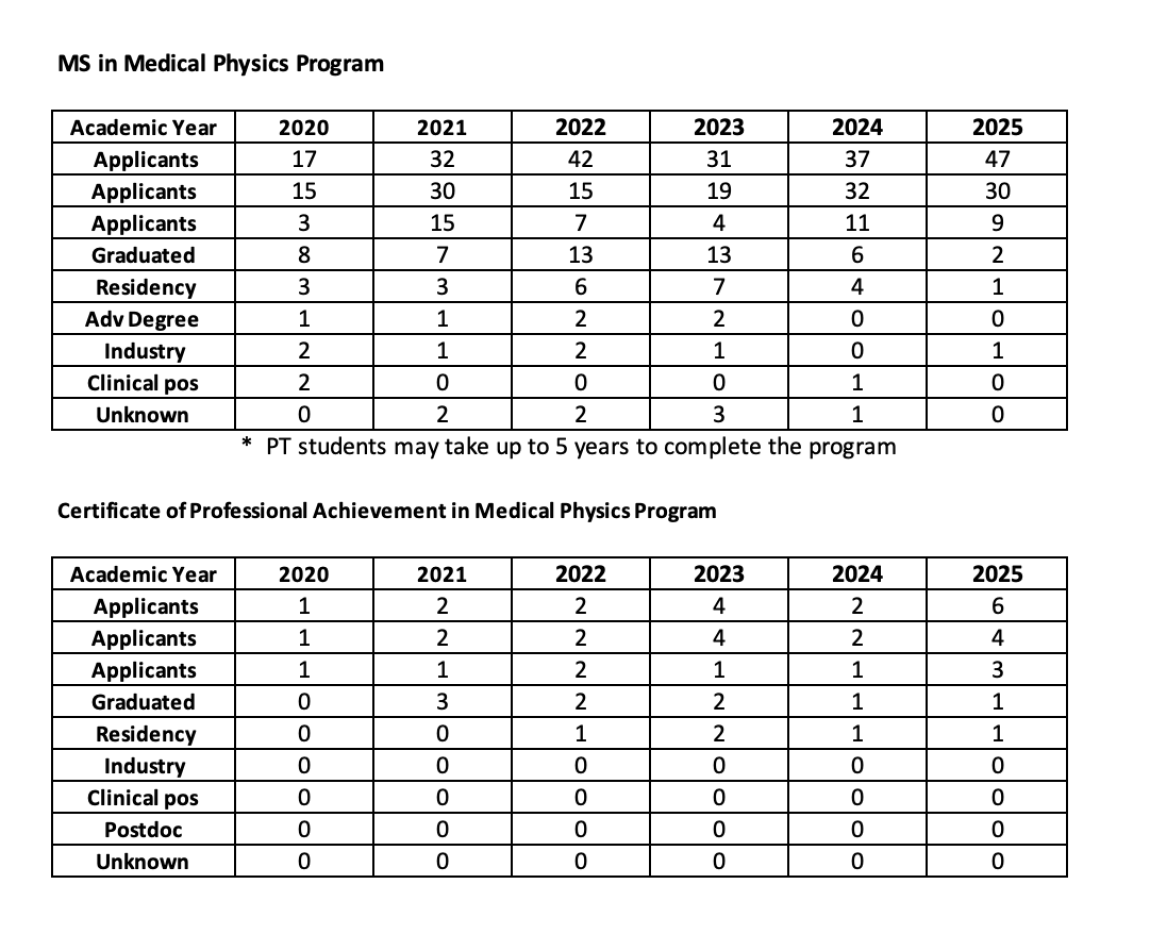
Admissions and Placement Statistics
Image
“I enjoyed my time in Columbia's Medical Physics program. I had the opportunity to perform novel dosimetric research, have hands-on experience with CT scanners and linear accelerators, and connect with faculty who were and are on the forefront of medical physics related research. I acquired a wealth of knowledge from the classes I have taken in the APAM department and the practicums offered afford me the experience to utilize that knowledge in a practical setting. Also studying in New York City is a big plus as well since there are so many things to explore in the city.”
Kevin Liu
Former Medical Physis Graduate Student
News & Research
See all
Faculty & Staff
Columbia Engineering Scientists Honored for Advancing Unique Fusion Approach
Sep 30, 2026