Image
Applied Physics Program
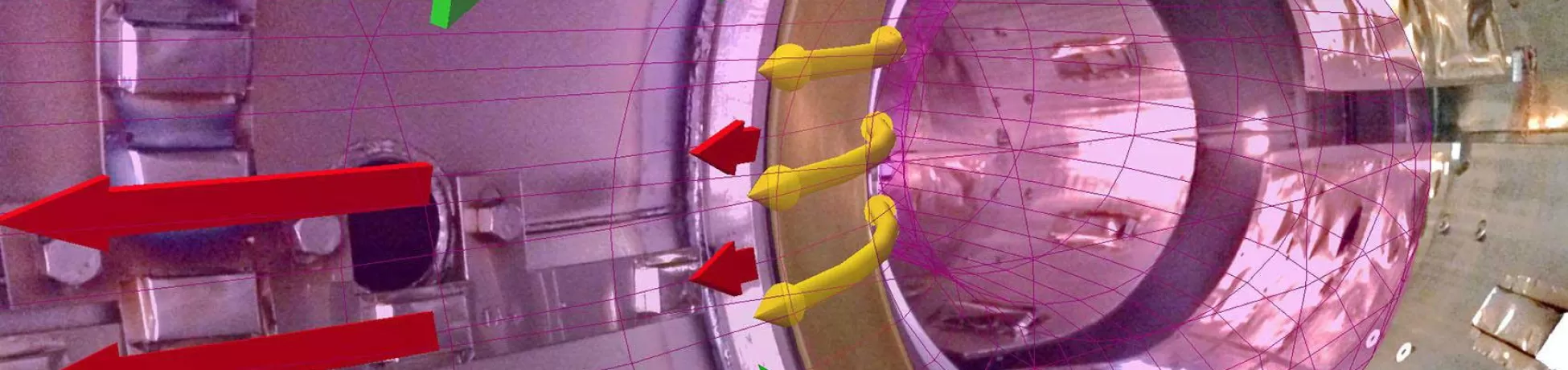
Welcome to the Applied Physics Program in the Department of Applied Physics and Applied Mathematics. Applied Physics includes plasma physics and controlled fusion, solid-state physics, optical and laser physics.
Programs
Undergraduate
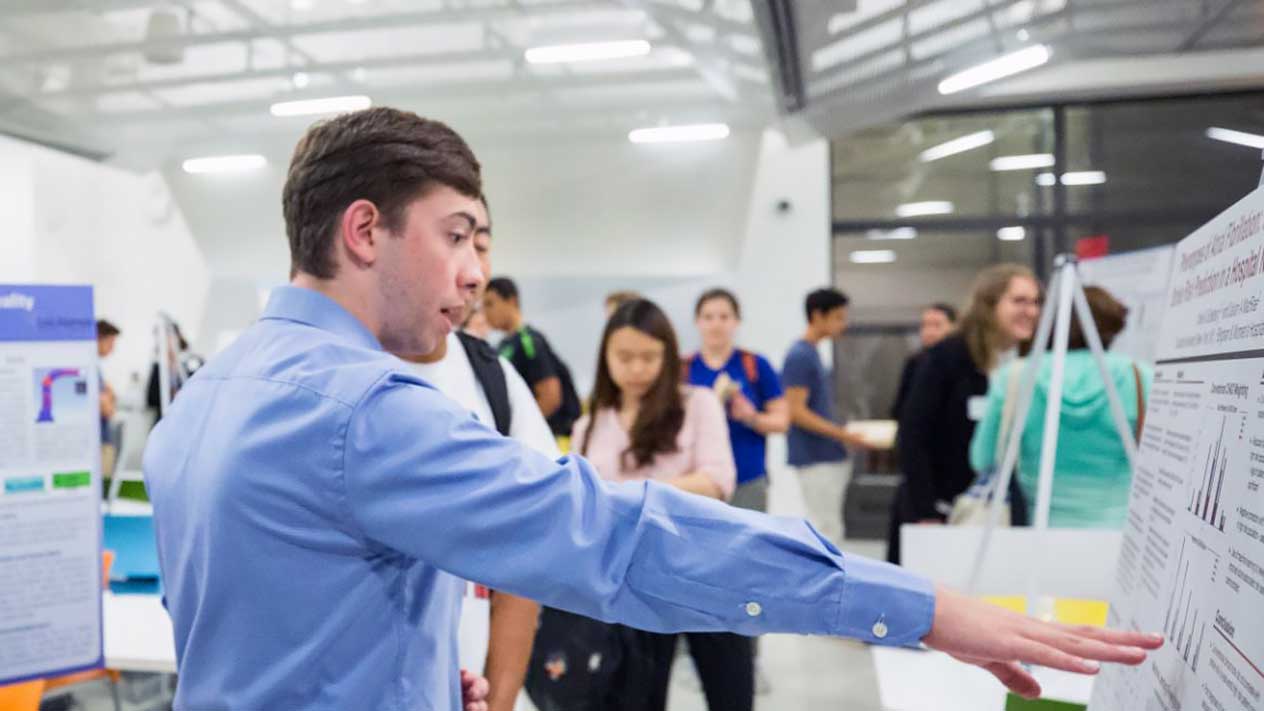
The applied physics undergraduate program stresses the basic physics that underlies most developments in engineering and the mathematical tools that are important to both physicists and engineers.
Graduate
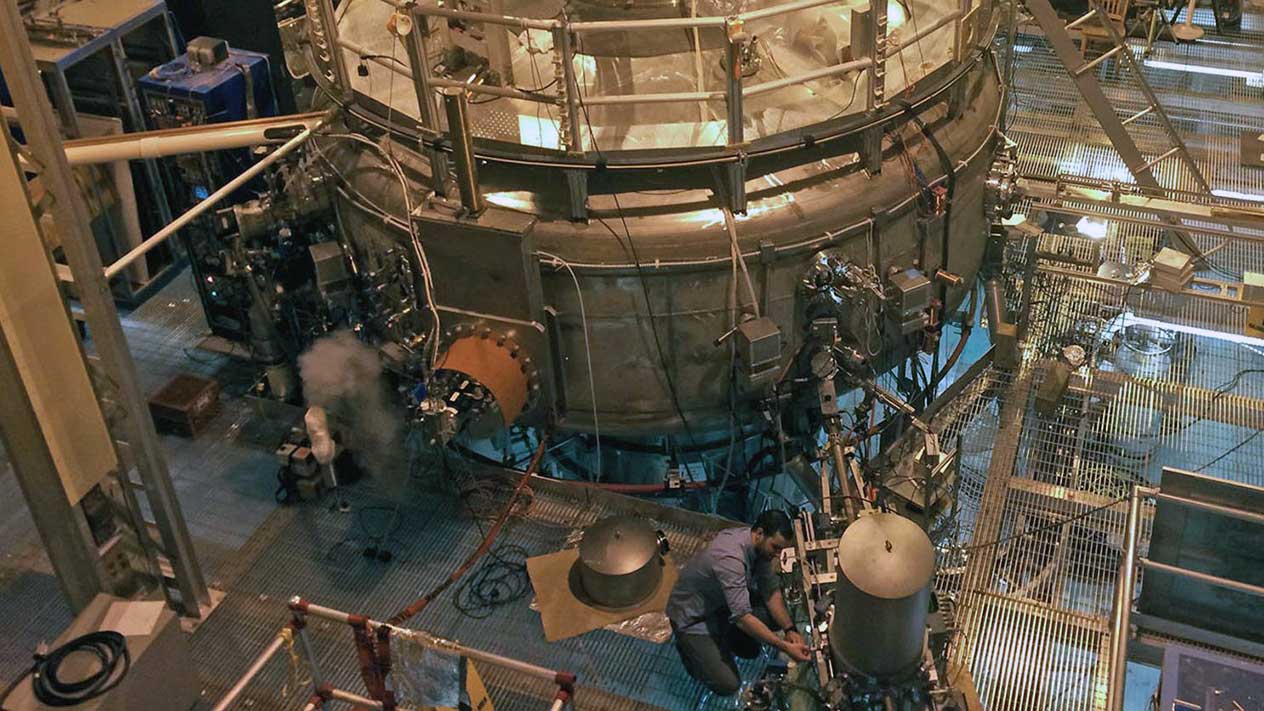
We offer graduate studies leading to the Master of Science (MS), Master of Philosophy (MPhil), and Doctor of Philosophy (PhD) degrees.
Overview
The applied physics undergraduate program stresses the basic physics that underlies most developments in engineering and the mathematical tools that are important to both physicists and engineers. Since the advances in most branches of technology lead to rapid changes in state-of-the-art techniques, the applied physics program provides the student with a broad base of fundamental science and mathematics while retaining the opportunity for specialization through technical electives. The applied physics curriculum offers students the skills, experience, and preparation necessary for several career options, including opportunities to minor in economics and to take business-related courses.
The Department offers graduate study leading to the degrees of Master of Science (MS), Doctor of Engineering Science (EngScD) and Doctor of Philosophy (PhD) in applied physics, with specialization in plasma physics and controlled fusion; solid-state physics; optical and laser physics; and medical physics.
Careers
-
Career Directions in Applied Physics
- Applied physics provides excellent preparation for and is a traditional pathway to graduate programs in physics-related areas including the applied physics areas of condensed matter, plasma, and optical physics, and biophysics, as well as areas such as high energy physics and astrophysics.
- Applied physics is a great vehicle for entry into many types of graduate-level programs in engineering fields, with a background as compelling for these graduate programs as are bachelors degrees in engineering.
- Applied physics provides superb preparation for a wide range of positions in university, government, and industrial organizations, in part because the applied physics curriculum is highly customizable with elective chains possible in diverse applications of the student’s choice.
- Applied physics is perhaps the best preparation for careers in general technology areas, and is ideally suited for up-and-coming areas, such as energy and nanotechnology.
- Applied physics is very well suited for any career requiring strong experimental and/or theoretical and/or calculation skills.
- Applied physics is a strategic major for pre-med, pre-dental, pre-teaching, and other pre-professional students, in part because it provides a strong background in core areas, combined with great flexibility in the choice in electives.
- Applied physics is an ideal background for careers in patent law.
- Applied physics offers a seamless way to enter masters programs and then start careers in the highly-recruited area of medical physics.
- Applied physics is excellent preparation for careers at the interfaces of biology, medicine, and physics.
- Applied physics provides a very desirable pathway to careers in finance.
- Career Resources
Applied Physics Faculty
The Applied Physics faculty members are leaders in the fields of plasma physics and controlled fusion; solid-state physics; and optical and laser physics
-
Plasma Physics Faculty
Allen H. Boozer: Plasma theory, theory of magnetic confinement for fusion energy, nonlinear dynamics
Gerald A. Navratil: Plasma physics, plasma diagnostics, fusion energy science
Elizabeth Paul: Plasma physics; theory of the magnetic confinement of plasmas; fusion energy science; PDE-constrained optimization; shape optimizationCarlos Paz-Soldan: Plasma physics, magnetically confined plasmas, plasma stability and control, fusion energy technologies
Ben Zhu: Plasma physics; numerical modeling of magnetized plasma; turbulence and transport processes; fusion exhaust and control strategies; ML/AI applications in fusion energy science.
-
Solid State & Optical Physics Faculty
William Bailey: nanoscale magnetic films and heterostructures, materials issues in spin-polarized transport, materials engineering of magnetic dynamics
Aravind Devarakonda: quantum materials synthesis, nanodevice fabrication, low-temperature physics; superconductivity, strongly-correlated matter, topologically ordered phases
Alexander L. Gaeta: Ultrafast nonlinear optics, nanophotonics, nonlinear propagation in fibers and bulk media, photonic crystal fibers, coherent interactions of laser light with matter, the generation of non-classical light fields, stimulated scattering processes
Chris A. Marianetti: Predicting materials properties from first-principles computations; materials with energy related applications; density-functional theory; dynamical mean-field theory; transition-metal oxides; actinides, energy storage and conversion materials
Latha Venkataraman: Single molecule electronics and mechanics, scanning tunneling microscopy & spectroscopy, x-ray photoemission spectroscopy
Nanfang Yu: Mid-infrared and far-infrared optics and optoelectronic devices, active plasmonics and metamaterials with gain media, reconfigurable metainterfaces based on phased optical antenna arrays, biophotonics, and biologically inspired flat optics
Xueyue (Sherry) Zhang: Quantum devices and their applications, superconducting qubits, solid state spins, quantum light-matter interaction, metamaterials, quantum many-body dynamics, topological photonics, quantum information, quantum networking
Applied Physics Videos
Explore Columbia Applied Physics through faculty interviews, lab tours, and stories about research advancing the field.
 Play video
 Play video
 Play video
 Play video
 Play video
 Play video
 Play video
 Play video
x/x

Student Spotlight
"I knew I wanted to come to Columbia because it's one of the few universities with a degree in plasma physics... All the hands-on experience I had at Columbia both as an undergraduate and a graduate student is what made me into the scientist I am today."
Alex Battey
PhD’21
News & Research
See all
Faculty & Staff
Columbia Engineering Scientists Honored for Advancing Unique Fusion Approach
Sep 30, 2026