Faculty & Staff
Columbia Climate Week: Accelerating Commercial Fusion
October 17, 2024
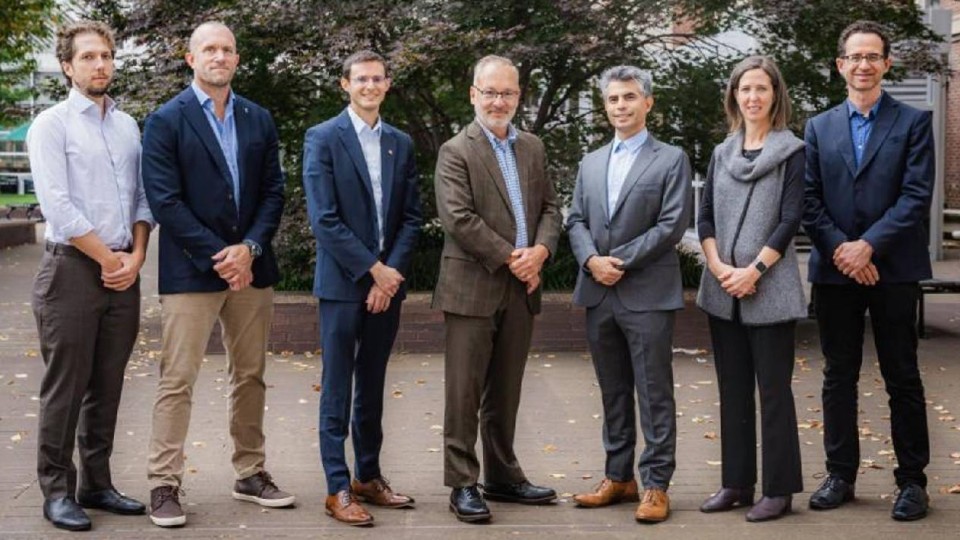
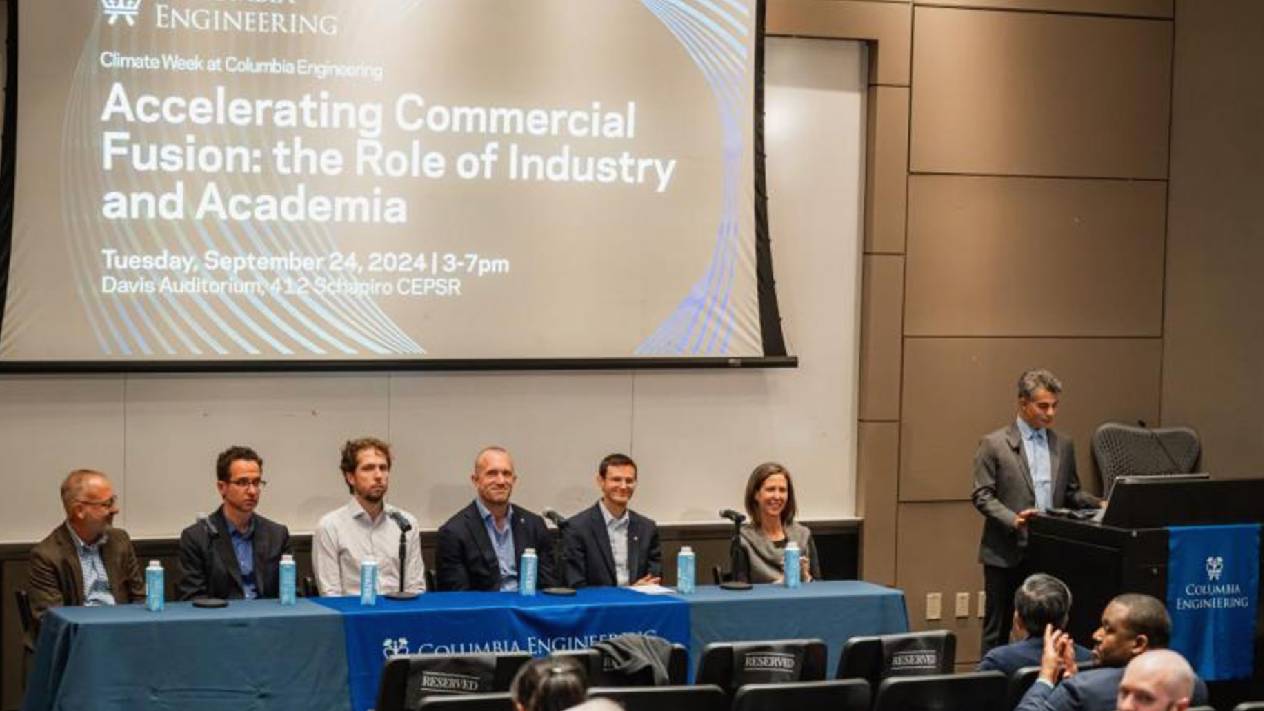
Bringing together experts from Fusion Industry and Academia, the Columbia University School of Engineering and Applied Science recently hosted a panel discussion entitled "Accelerating Commercial Fusion: the role of Industry and Academia.”
The panel included Prof. Alexis Abramson, the incoming Dean of the Columbia Climate School, Prof. Cary Forest, Professor of Physics at the University of Wisconsin-Madison and Co-Founder / CSO of Realta Fusion, Charlie Baynes-Reid, the CFO and General Counsel of Type One Energy, Dr. Michael Ginsberg, President, Tokamak Energy LLC, Michael Segal, Senior Director of Open Innovation at Commonwealth Fusion Systems, and Sam Wurzel, Founder of Fusion Energy Base and former DOE Employee.
A vibrant discussion was executed exploring these questions:
Is fusion energy just around the corner? Recent years have seen several dramatic advances in this field: fusion ignition by lasers at the National Ignition Facility, 59 megajoules of fusion energy by the magnetic approach in the United Kingdom, and most importantly the emergence of a vibrant fusion private sector backed by $7 billion of venture capital funding.
How can progress in fusion be accelerated? This panel explored the progress and plans in the private sector, discuss the ambitious timelines of leading fusion startup companies, and identify the challenges facing the sector.
What is academia’s role? The panel discussed the essential role of university programs in performing early-stage R&D, developing new concepts, and building the fusion workforce of tomorrow.
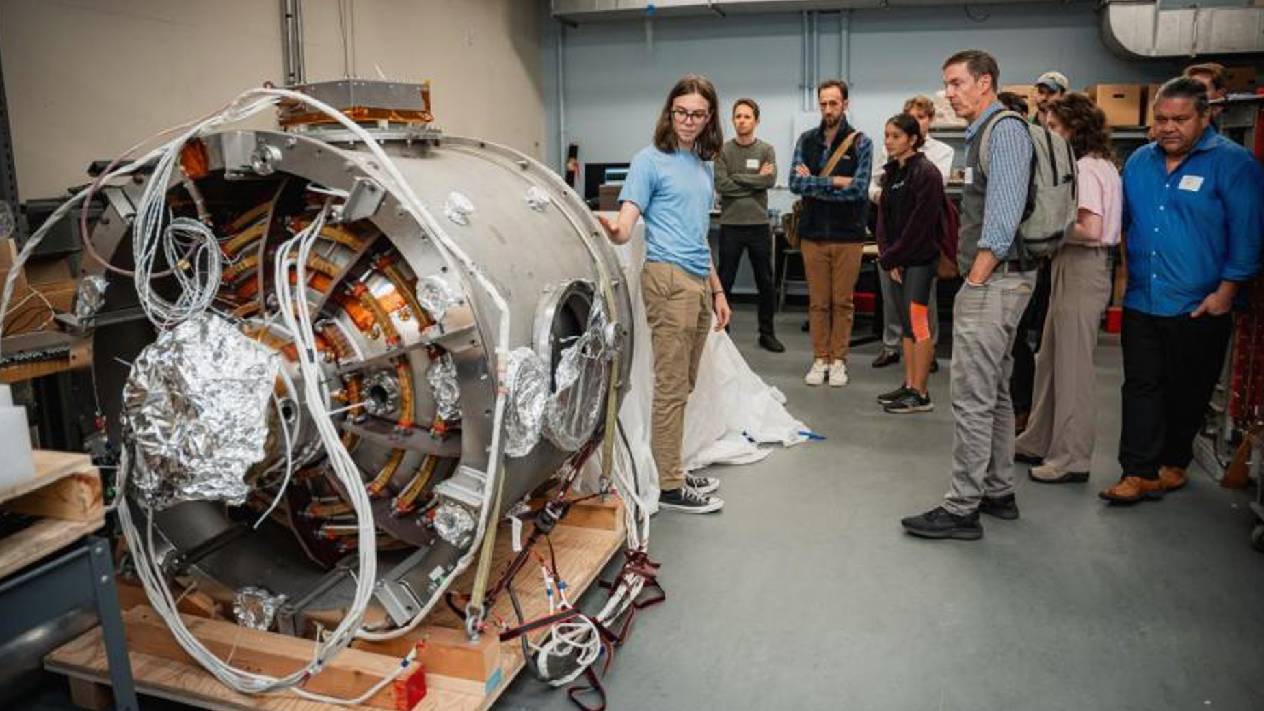
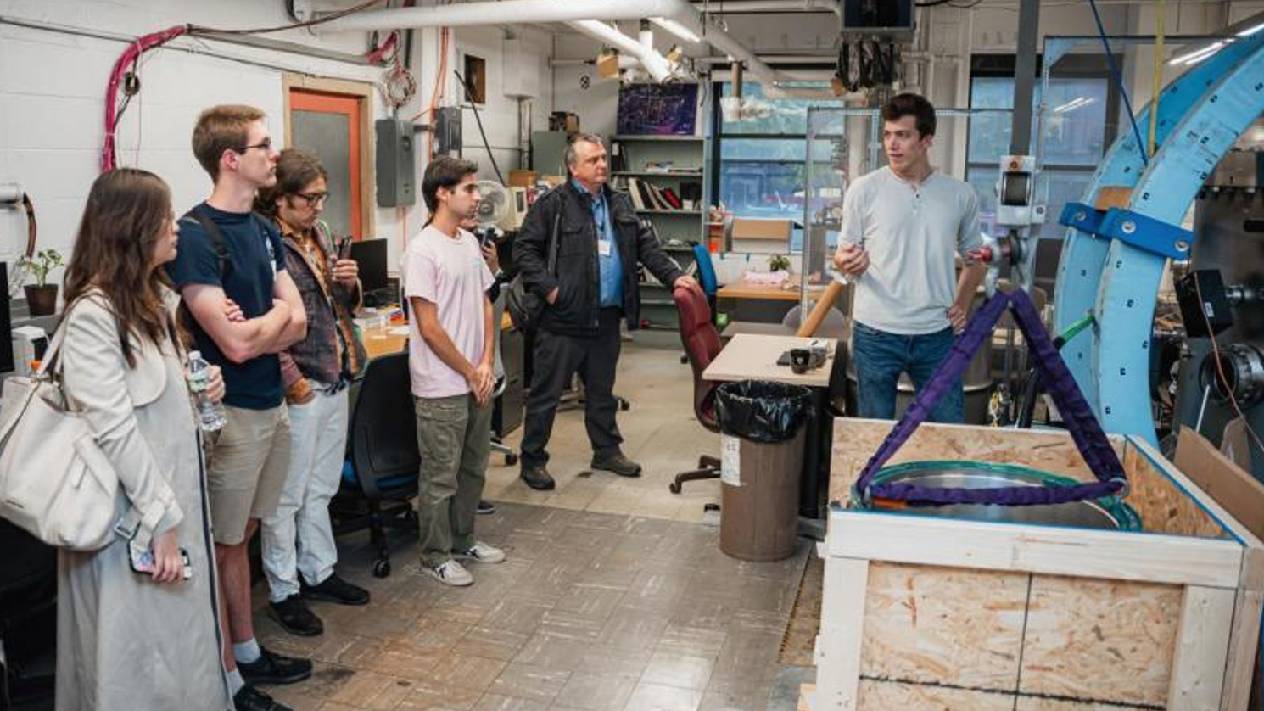
Beyond the panel, the event also included a tour of the Columbia Plasma Physics Laboratory, one of the premier academic laboratories in the field, and concluded with a reception in Carleton Commons.
Video: Accelerating Commercial Fusion: the Role of Industry and Academia
Is fusion energy just around the corner? Recent years have seen several dramatic advances in this field: fusion ignition by lasers at the National Ignition Facility, 59 megajoules of fusion energy by the magnetic approach in the United Kingdom, and most importantly the emergence of a vibrant fusion private sector backed by $7 billion of venture capital funding.
Photos

x/x